An ATS is the essential solution for simplifying your recruitment. By centralising and automating every stage of the process, it lets you manage applications, track candidates and make more informed decisions, all from a single platform.
What is an ATS?
Definition:
An ATS, or applicant tracking system (in full, Applicant Tracking System), is software used by recruitment professionals to manage and track applications throughout the recruitment process. It is a candidate tracking system that automates and streamlines the different stages of recruitment, from publishing job ads to the final selection of candidates.
It lets you centralise the applications you receive in a single online space, sort them and track them throughout the recruitment process, which makes management and communication easier and helps you save valuable time.
How does an ATS work?
An ATS works in three main stages:
- Collecting and centralising applications
- Automatic analysis and sorting
- Managing and tracking the recruitment process
The software collects applications from different sources:
- Job boards (job sites)
- Professional social networks (such as LinkedIn)
- Unsolicited applications
The ATS automatically analyses CVs and cover letters using predefined criteria, including:
- Key skills
- Professional experience
- Candidate location
The ATS also lets recruiters:
- Communicate easily with candidates
- Schedule interviews and meetings
- Share feedback and candidate assessments
Discover our ATS, Nicoka CABS, with a personalised demonstration!
Why use an Applicant Tracking System for your recruitment?
Using an Applicant Tracking System (ATS) for your recruitment offers several advantages, whether you have a few candidates to manage or hundreds of applications to process.
Simplified sourcing
The ATS lets you receive all applications in one place. It then makes it easier to manage the applications received by letting you filter and sort CVs against your selection criteria, expected skills and desired experience. The ATS helps you target the most relevant and best-qualified candidates.
Easier control of your employer brand
The ATS lets you simplify, and even automate, your external communication. You can schedule interviews efficiently, you can communicate with candidates using predefined email templates and you can automate email sending at every stage of the recruitment process.
Time savings on repetitive tasks
With an ATS you can automate tasks such as updating the status of applications, sending automatic responses to candidates to keep them informed of the status of their application, sending documents to candidates and clients. You can also send reminder emails to clients asking them to give their feedback on the candidates put forward.
Effective sharing of candidate files
By equipping yourself with an ATS, you can create candidate file templates that you then share with your clients using secure access. You choose the type of document to share (interview, assessment, CV) as well as the stages to include. From their dedicated space, your clients give their feedback on the candidates put forward.
Track your performance in real time
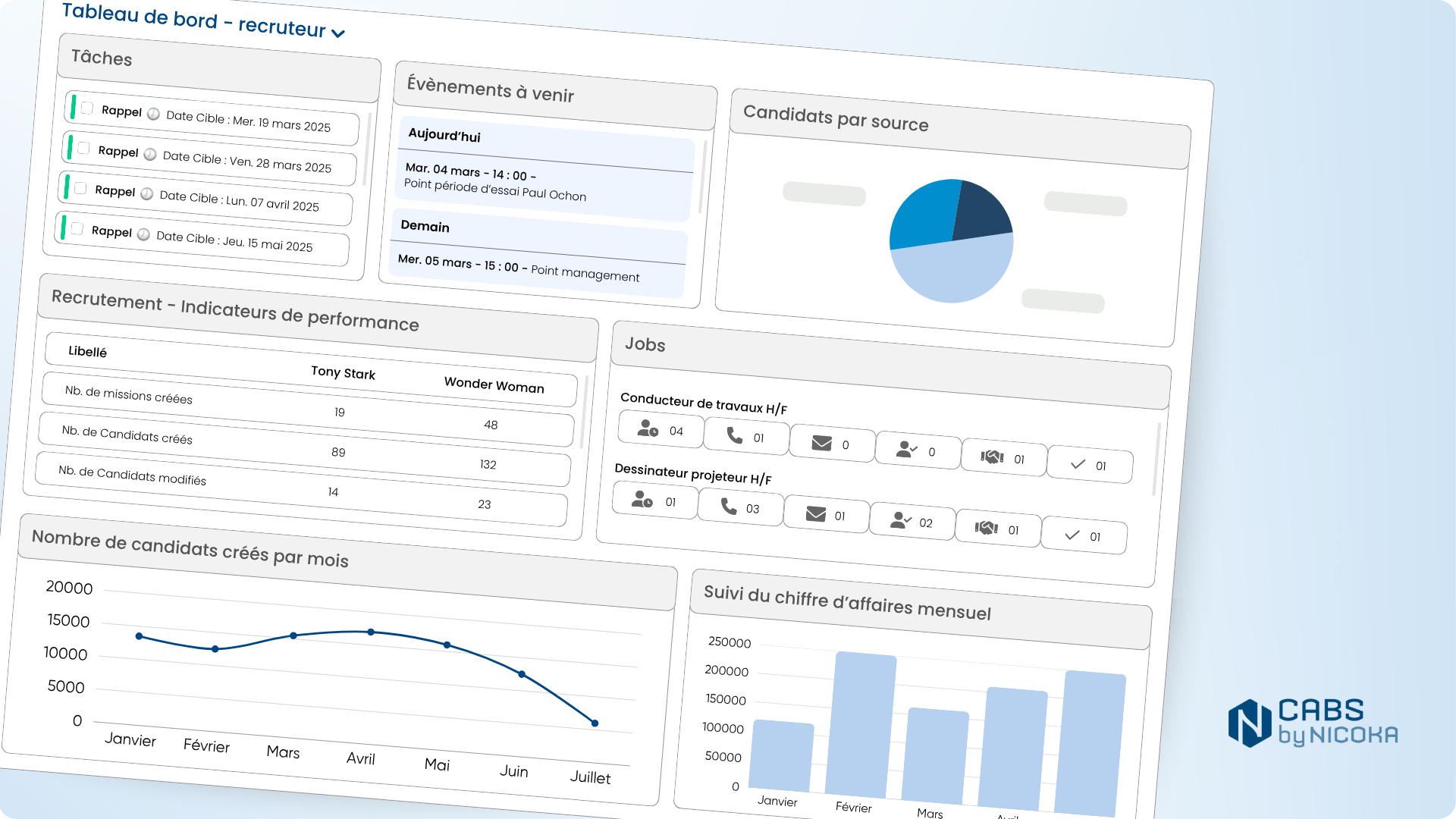
An ATS can also integrate performance tracking tools to help employers assess the effectiveness of their recruitment over the long term.
Who are ATS solutions designed for?
Business owners, particularly in small and medium-sized enterprises, can also use an ATS to simplify their recruitment process, manage applications more efficiently and make informed hiring decisions.
Recruitment officers and HR directors are the main users of an ATS. They use it to manage applications, sort profiles, communicate with candidates and schedule interviews.
Line managers and operational staff are also potential ATS users. They can access the system to review candidate profiles, provide feedback and take part in the selection process.
Recruitment firms and headhunters often use ATS solutions to manage recruitment processes for their clients. They handle large volumes of applications and need powerful tools to sort, track and manage candidates.
How to choose your ATS
When choosing an ATS (Applicant Tracking System), it is important to consider several factors to find the solution that best meets your specific needs. Here are some key points to consider:
Recruitment challenges: Identify the specific challenges and issues you face in your recruitment process. This may include managing a high volume of applications, improving candidate sourcing, streamlining team collaboration or meeting specific regulatory or industry requirements.
Requirements and features: Draw up a list of the essential features you need. This may include automatic application collection and sorting, candidate communication, team collaboration, reporting and analytics, integration with other HR tools and more. Make sure the ATS you are considering offers the features you need.
Company size and type: Consider the size of your company and your recruitment needs. Some ATS solutions are better suited to small and medium-sized businesses, while others are designed for larger organisations with higher recruitment volumes. Look for an ATS that matches the size and type of company you recruit for.
Budget: Determine the budget you can allocate to an ATS. ATS costs vary depending on features, company size and pricing model. Make sure to assess the value for money and choose a solution that fits your budget while meeting your needs.
Run a benchmark: Carry out thorough research and compare several ATS solutions on the market. Check user reviews, look at the features offered, pricing, available integrations, interface usability and customer support. A benchmark will help you make an informed decision based on industry best practice.
Assessments and demonstrations: Before making a final decision, request demonstrations of the ATS from potential suppliers. This lets you understand the interface, features and ease of use. You can also ask for references or contact existing clients to get their feedback on their experience with the ATS.
By taking these factors into account, you can choose an ATS that best addresses your recruitment challenges, meets your specific requirements and helps you attract the best talent.
What are the benefits of an ATS?
Candidate performance tracking
An ATS lets you track candidate performance throughout the recruitment process. Recruiters can assess the effectiveness of each stage, identify bottlenecks and optimise their approach based on concrete data.
Better candidate experience
An ATS sends automatic notifications and updates to candidates, improving their experience throughout the recruitment process. This strengthens the company's positive image and builds good relationships with candidates.
Time savings
An ATS automates many administrative recruitment tasks such as CV screening, sending notifications and scheduling interviews, freeing up time for recruiters to focus on higher-value activities.
Easier collaboration
An ATS lets recruitment team members collaborate more effectively. They can share notes, assessments and feedback on candidates in real time, improving coordination and decision-making.
Centralised application management
An ATS collects and stores all applications in one centralised place. This makes it easier to search for and find candidate profiles, reduces the risk of losing information and improves the overall management of applications.
Employer brand promotion
Some ATS solutions offer features to personalise communications with candidates. This helps provide a consistent, professional experience, strengtheningthe employer brand and attracting high-quality candidates.
The tailor-made ATS + CRM for recruitment professionals.